Start with a purpose, not a spice rack
Most homemade blends fail because they try to do everything. Twelve spices in equal amounts usually taste muddy. Instead, decide on one job: brightness for grilled vegetables, warmth for winter stews, lift for noodles, crunch for salads. Then build around two or three lead spices that do that job, with supporting notes that echo or contrast them.
Traditional blends are excellent teachers because generations of cooks have already refined them. Za'atar is built for brightness, berbere for deep warmth, shichimi for lift. Learn the traditional structure first; your personal version can follow.
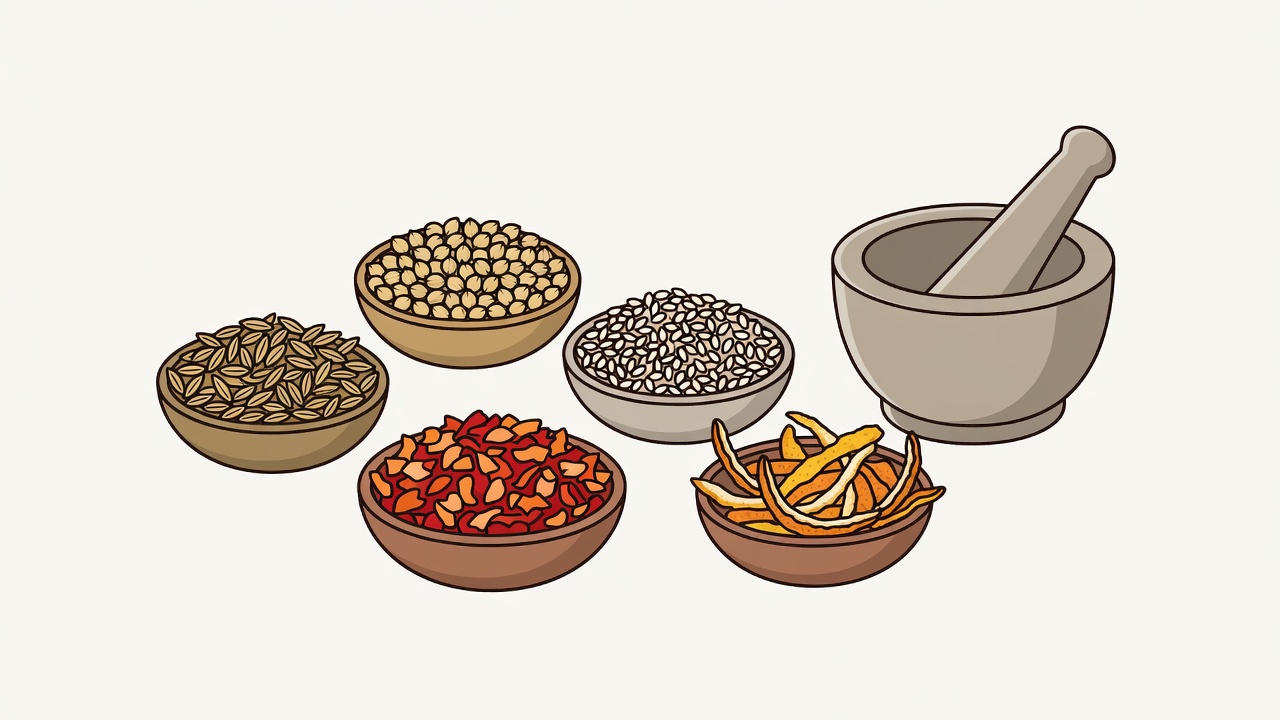
The core method
- Buy whole where possible. Whole seeds hold their aroma far longer than ground spice.
- Toast gently. Use a dry pan over medium heat, shaking often, until fragrant — usually a minute or two. Remove immediately; residual heat continues cooking.
- Cool completely. Grinding warm spices can make them clump.
- Grind. A mortar and pestle gives texture; a dedicated electric grinder gives fine powder.
- Mix and taste. Taste a pinch on a piece of bread or rice with a little oil and salt, not straight from the spoon.
- Store well. Airtight jars, away from heat and light. Ground blends are at their best within a few months.
Four blends and how they are built
Proportions below are starting points by volume, written in "parts". Adjust to your taste and your ingredients — a fresh harvest of sumac is far brighter than an old one.
Brightness · Levant
The name also refers to a wild herb. Traditionally mixed with olive oil and baked onto man'oushe flatbread in Lebanon and across the Levant.
- 3 parts dried thyme or oregano
- 2 parts toasted sesame
- 1½ parts ground sumac
- ½ part flaky salt
Warmth and depth · Ethiopia
Essential to doro wat and misir wat. Recipes vary widely by household; this is a simplified version for home cooks.
- 4 parts mild dried chilli
- 1 part paprika
- ½ part each fenugreek, coriander, ground ginger
- ¼ part each cardamom, black pepper, allspice, cloves
Lift · Japan
Seven-spice blend associated with Tokyo, Kyoto and Nagano, sprinkled over udon, soba and yakitori.
- 2 parts coarse red chilli flakes
- 1 part dried citrus peel
- 1 part sansho pepper
- ½ part each black and white sesame, nori, ginger
Aromatic warmth · North India
Usually added near the end of cooking. Compositions differ greatly by region and family.
- 2 parts coriander seed
- 2 parts cumin seed
- 1 part black peppercorns
- ½ part each green cardamom, cinnamon, cloves
Building your own signature
Once you have made a traditional blend, try one deliberate change and name it honestly. Add dried orange peel to your za'atar for a citrus-forward version, or smoked paprika to a homemade chilli rub. Change one element at a time and taste it in a real dish, not just from the jar.
Weeknight roast vegetable dust
ExperimentToasted cumin, coriander, sumac and sea salt. Sprinkle on carrots or cauliflower after roasting.
Bright popcorn seasoning
ExperimentLime zest dried overnight, chilli flakes and fine salt. Brightness and heat over buttery popcorn.
Savoury sesame crunch
ExperimentToasted sesame, crumbled nori and a pinch of sugar, inspired by Japanese furikake. Over rice or eggs.
Safety: sesame, mustard and some spice blends are common allergens. Label shared jars clearly, and dry any fresh zest fully before mixing to avoid mould.